




Understanding the difference between viral and bacterial infection is important because both can cause similar symptoms but may require different treatments. Knowing the basics of viral vs bacterial infection can help you understand why antibiotics are not appropriate for every illness and why proper diagnosis matters. Learning the differences between Bacterial and Viral Infections can help people avoid unnecessary use of antibiotics.
What Are Bacterial Infections?
Bacterial and viral infections are two common causes of illness, but they are caused by very different types of microorganisms. Bacterial infections occur when harmful bacteria enter the body, multiply, and interfere with normal tissues or body functions. Bacteria are microscopic living organisms, and while many bacteria are harmless or even helpful, certain species can cause disease when they enter the wrong part of the body or multiply excessively.
When comparing bacterial vs. viral infections, bacteria are living, single-celled organisms that can reproduce independently under suitable conditions. Depending on the organism and where the infection develops, bacterial illness can affect the throat, lungs, urinary tract, skin, digestive system, bloodstream, or other organs. Recognizing the key differences between Bacterial and Viral Infections is an important part of making informed decisions about infection care.
What is a Viral Infection?
A viral infection occurs when a virus enters the body and uses host cells to reproduce. The viral infection meaning is an illness caused by a virus that infects the body’s cells and triggers an immune response.
Viruses are much smaller infectious agents than bacteria and have a fundamentally different way of reproducing. This is one of the main points to understand when looking at virus vs bacteria.
Some viral infections may require specific antiviral treatment depending on the virus, symptoms, timing, and the patient’s medical condition. Products such as Molnuvid 200 mg (Molnupiravir 200 mg) and Movfor 200 mg (Molnupiravir 200 mg) are listed in the Anti Viral category, but antiviral medicines should only be used when medically appropriate.
Bacterial vs. Viral Infections: The Key Difference
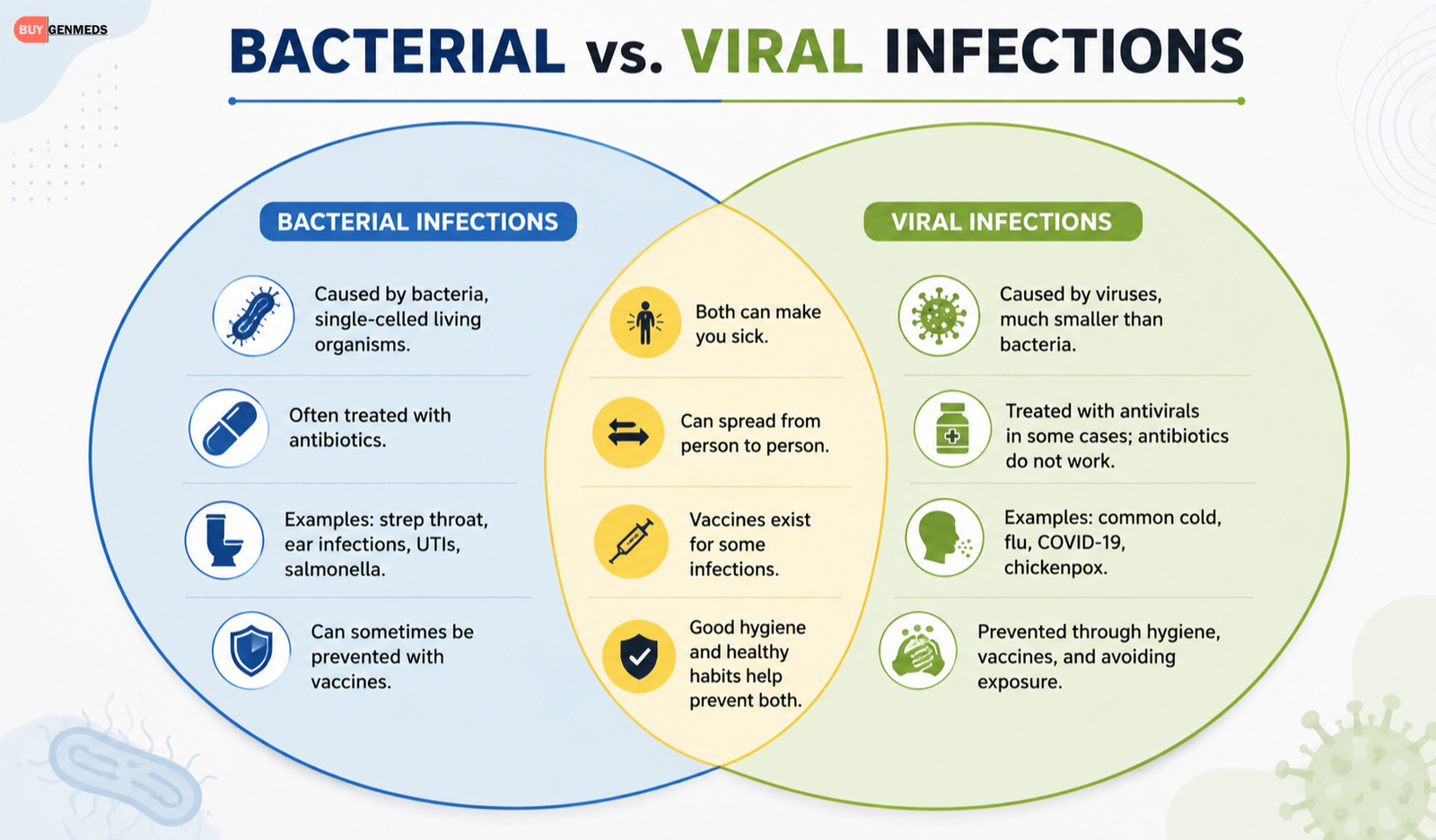
The simplest distinction when comparing viral vs bacterial infections is the type of microorganism responsible for the illness. Bacterial infections are caused by bacteria, while viral infections are caused by viruses.
So, what is the difference between bacteria and virus? Bacteria are living single-celled organisms that can reproduce independently, while viruses require host cells to reproduce. This fundamental difference also explains why antibiotics can work against certain bacterial infections but do not treat viral infections. Understanding Bacterial and Viral Infections can help you recognize why different illnesses require different treatments.
The difference between bacteria and virus is therefore not simply about symptoms. It involves their structure, reproduction, and how they interact with the human body.
For some viral conditions, doctors may prescribe specific antiviral medicines. For example, the Anti Viral category includes products such as Valclovir 500mg, Valclovir 1000mg, and Acivir. Their suitability depends on the specific viral infection and should not be assumed based only on symptoms.
Bacteria vs Virus: Quick Comparison
| Feature | Bacterial Infection | Viral Infection |
|---|---|---|
| Cause | Bacteria | Viruses |
| Reproduction | Bacteria can reproduce independently | Viruses require host cells |
| Antibiotics | May be useful for certain bacterial infections | Do not treat viruses |
| Antivirals | Generally not used | Available for some viral diseases |
| Symptoms | Can include fever, pain, swelling, cough, diarrhea, etc. | Can include fever, cough, fatigue, congestion, aches, diarrhea, etc. |
| Diagnosis | May involve examination, cultures, rapid tests, or other testing | May involve examination and viral testing when appropriate |
| Prevention | Hygiene, vaccination for certain diseases, food safety, infection control | Vaccination for certain diseases, hygiene, ventilation, infection control |
Difference Between Viral and Bacterial Infection: Symptoms Can Overlap
One of the biggest misconceptions about bacterial vs viral infections is that symptoms always reveal the cause. In reality, both can cause fever, tiredness, headaches, coughing, sore throat, digestive symptoms, and body aches.
This makes the difference between viral and bacterial infection difficult to determine from symptoms alone. Even the color or thickness of mucus is not, by itself, a reliable way to determine whether an infection is bacterial or viral. The simplest distinction between Bacterial and Viral Infections is the type of microorganism responsible for the illness.
How to Differentiate Between Viral and Bacterial Infection
If you are wondering how to differentiate between viral and bacterial infection, there is no universal symptom checklist that can provide a perfect answer.
Healthcare professionals usually consider the patient’s symptoms, medical history, physical examination, duration of illness, and, when necessary, diagnostic tests. This approach is more reliable than trying to determine virus vs bacterial infection based only on symptoms. Bacterial and Viral Infections can cause similar symptoms, making it difficult to identify the exact cause without proper evaluation.
A fever, cough, sore throat, or fatigue can occur with either type of infection. Therefore, the difference between bacterial and viral infection often requires clinical evaluation or testing.
If a viral infection is confirmed, treatment may sometimes involve a specific antiviral medicine. For example, medicines such as Valtrex 500 mg (Zimivir), Valclovir, or Acivir are listed in the Anti Viral category for particular viral-related uses, but the correct treatment depends on the diagnosed condition.
Difference Between Viral and Bacterial Fever
People often search for the difference between viral and bacterial fever, but fever alone cannot reliably identify the cause of an infection.
Both bacterial and viral infections can cause fever. The pattern, duration, severity, associated symptoms, and progression of the illness may provide useful clues, but these factors are not definitive on their own. A healthcare professional may need to evaluate the complete clinical picture and perform testing when appropriate. Although Bacterial and Viral Infections may both lead to fever and fatigue, the microorganisms responsible are completely different.
Common Examples of Bacterial Infections
Bacteria can cause infections in almost every part of the body. Some familiar examples include streptococcal throat infections, certain urinary tract infections, tuberculosis, bacterial skin infections, and some forms of pneumonia.
It is important to remember that the same type of illness can have different causes. Pneumonia, for example, can have bacterial, viral, fungal, or other causes. This is another reason why bacteria vs virus cannot always be determined simply from the location of symptoms. Preventive measures such as good hygiene and appropriate vaccination can reduce the risk associated with certain Bacterial and Viral Infections.
Some viral illnesses have specific antiviral treatment options. For instance, Antiflu 75 mg capsule is listed in the Anti Viral category, while Acivir 200 mg DT, Acivir 400 mg DT, and Acivir 800 mg DT are also listed as antiviral products. The appropriate medicine depends on the particular virus and the patient’s clinical situation.
Common Examples of Viral Infections
Viral infections include a broad range of illnesses, from short-lived respiratory infections to diseases that require long-term medical management. Common examples include the common cold, influenza, COVID-19, chickenpox, measles, and certain forms of viral gastroenteritis. Antibiotics are sometimes used for bacterial illnesses, but they do not treat Bacterial and Viral Infections as a combined category.
When considering viral vs bacterial infection, the presence of cough, fever, fatigue, or congestion does not automatically mean that an illness is viral. Testing and clinical assessment may sometimes be necessary. Understanding Bacterial and Viral Infections is important because bacterial and viral illnesses can look similar while requiring very different treatment approaches.
Do Antibiotics Work for Viral Infections?
No, Antibiotics do not treat viral infections. Antibiotics are medicines designed to act against bacteria, while viruses work differently and do not have the same biological targets.
This is one of the most important practical points in understanding virus vs bacteria. Taking an antibiotic for a cold, influenza, or another viral illness does not kill the virus. When symptoms persist or become worse, medical evaluation can help determine whether Bacterial and Viral Infections are responsible.
When an antiviral medicine is appropriate, the choice depends on the infection rather than simply the fact that symptoms appear viral. Products listed under the Anti Viral category, such as Valclovir, Valtrex, and Acivir, are examples of products categorized for antiviral use, but a healthcare professional should determine whether a specific medicine is suitable.
Can an Infection Be Both Bacterial and Viral?
Yes, A person can have a viral infection and then develop a secondary bacterial infection, although this does not happen in every case.
This possibility also shows why the difference between viral and bacterial infection is not always obvious from how symptoms develop. A viral illness can sometimes disrupt normal defenses or damage tissues, creating conditions that allow bacteria to cause an additional infection.
A secondary bacterial infection does not mean that an antiviral medicine or antibiotic should automatically be started. Treatment should be based on the suspected or confirmed cause of the infection. Understanding Bacterial and Viral Infections is important because both types can cause similar symptoms but may require different treatments.
Bacterial vs. Viral Infection Symptoms
Symptoms alone rarely provide a perfect answer when trying to determine bacterial vs viral infection symptoms. Viral respiratory illnesses commonly cause combinations of cough, congestion, sore throat, fatigue, headache, fever, and muscle aches. Bacterial infections can produce many of the same symptoms.
A useful approach is to focus on the pattern and progression rather than a single symptom. If symptoms are severe, persistent, or worsening, professional medical evaluation is preferable to trying to determine viral vs bacterial infection solely from an online symptom list. Bacterial and Viral Infections may affect different parts of the body, including the respiratory system, digestive tract, skin, and urinary tract.
Common Myths About Bacterial and Viral Infections
Myth: You can always tell bacterial and viral infections apart at home.
Symptoms overlap substantially, so it is not always possible to identify the cause without medical evaluation. If you are asking about the difference between virus and bacteria, remember that the biological difference is clear, but identifying which one is causing a particular illness may require testing. Treatment for Bacterial and Viral Infections depends on the specific microorganism responsible and the severity of the illness.
Conclusion
Understanding the difference between viral and bacterial infection can help explain why similar symptoms may require different approaches to treatment. Bacteria and viruses are fundamentally different types of infectious agents, and antibiotics are not effective against viruses. Knowing how Bacterial and Viral Infections spread can help people take appropriate steps to reduce the risk of transmission.
The key takeaway from viral vs bacterial infection is that symptoms such as fever, cough, fatigue, sore throat, and mucus changes can occur with both. When symptoms are severe, persistent, or worsening, a healthcare professional can help determine whether testing or targeted treatment is necessary. If you are looking for antiviral medicines for a diagnosed viral infection, you can explore the available options on Buygenmeds and choose a product that is appropriate for your condition based on professional medical guidance.
What is the main difference between bacterial and viral infections?
+
The main difference is the microorganism causing the illness. Bacterial infections are caused by bacteria, while viral infections are caused by viruses. They can produce similar symptoms, but the treatments are different. Antibiotics can treat certain bacterial infections but do not work against viruses.
How can I tell if an infection is bacterial or viral?
+
You usually cannot determine this reliably from symptoms alone. Fever, cough, sore throat, fatigue, congestion, and body aches can occur with both types of infection. Doctors may use a physical examination, medical history, rapid tests, cultures, molecular tests, or other investigations when necessary.
Do antibiotics help with viral infections?
+
No, Antibiotics are designed to target bacteria, not viruses. Taking antibiotics for a viral infection does not treat the virus and may expose you to side effects while contributing to antibiotic resistance.
Can a viral infection turn into a bacterial infection?
+
A viral infection can sometimes be followed by a secondary bacterial infection, but this does not happen in every case. A change in symptoms or significant worsening may warrant medical evaluation. Antibiotics should be used when a bacterial infection is suspected or confirmed and treatment is clinically appropriate.
When should I seek medical care for an infection?
+
Seek medical attention when symptoms are severe, rapidly worsening, unusually persistent, or associated with warning signs such as difficulty breathing, severe chest pain, confusion, fainting, severe dehydration, or other concerning symptoms. Infants, older adults, pregnant people, and people with certain health conditions may need medical evaluation sooner.